

Fuel quality changes need to work with vehicles, infrastructure and the way fuels are supplied and used. Successful implementation depends on getting these elements to work together.
Fuel ethers are compatible with existing and alternative powertrain technologies, including hybrid vehicles. They can also complement engine technologies designed to improve efficiency.
Compatible with existing and alternative powertrains, including hybrid vehicles, improving their environmental performance.
Help reduce fuel consumption by improving volumetric and thermal efficiency, complementing direct injection, turbocharging and higher compression ratios.
Help reach CO₂ emission reduction goals and renewable energy targets throughout their life cycle.
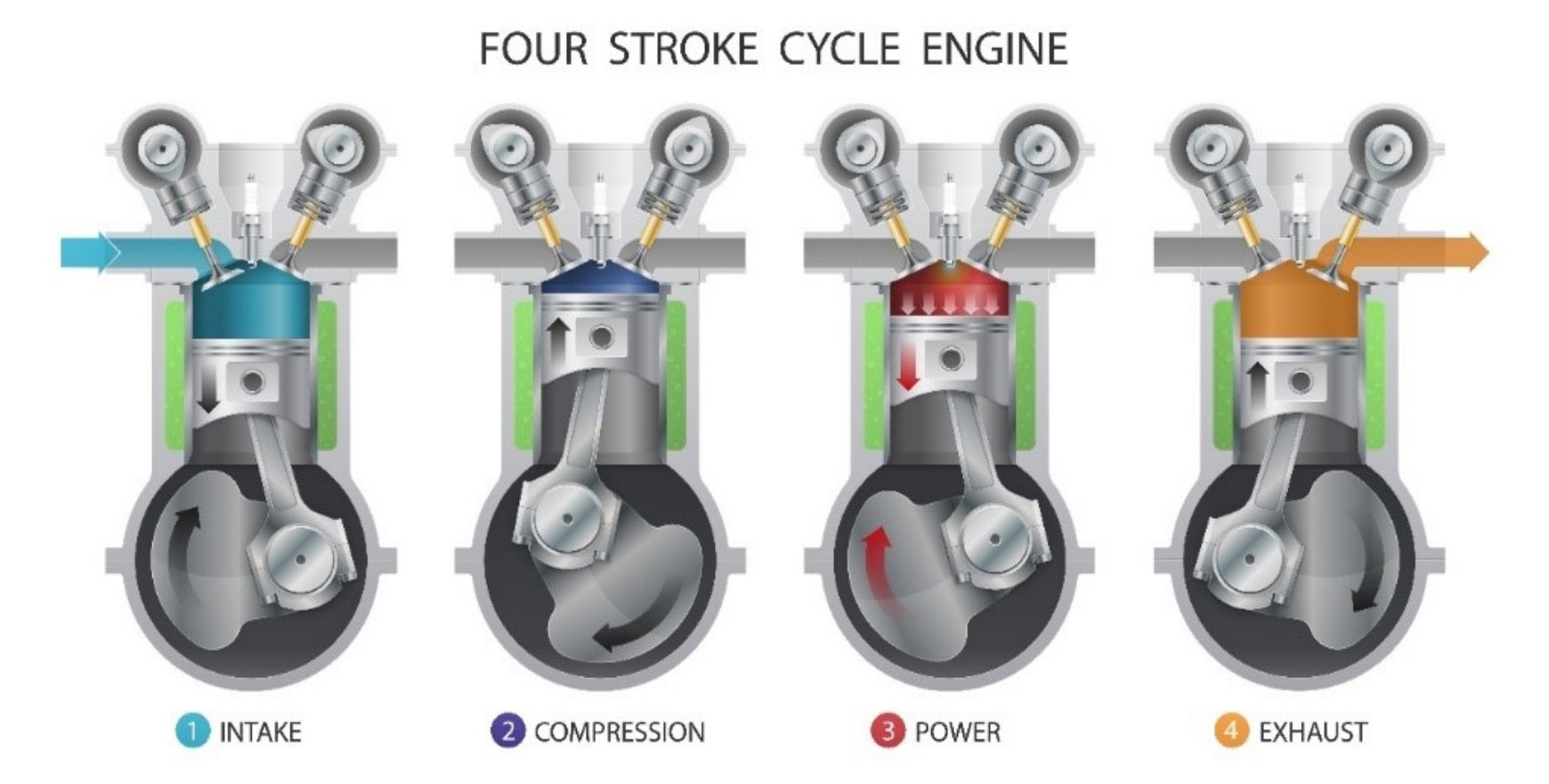
The four-stroke cycle engine. Illustration: Sustainable Fuels.
Across ASEAN, differences in standards, awareness and readiness have shaped the pace of cleaner fuel implementation.
Euro-equivalent standards arrive market by market — and within a market, petrol, diesel and two-wheelers rarely arrive together.
Vietnam
Malaysia
Singapore
Indonesia
Thailand
Philippines
EU
Euro 6
Gasoline 4-wheeler
Diesel 4-wheeler
Gasoline 4-wheeler
2022
Diesel 4-wheeler
2022
Gasoline 4-wheeler
Diesel 4-wheeler
Euro 5
Gasoline 4-wheeler
1/2022
Diesel 4-wheeler
1/2022
Gasoline 4-wheeler
9/2025
Diesel 4-wheeler
7/2021
Gasoline 4-wheeler
2021
Diesel 4-wheeler
2021
2-wheeler
Euro 4
Diesel 4-wheeler
2-wheeler
Gasoline 4-wheeler
Diesel 4-wheeler
4/2021
Gasoline 4-wheeler
Diesel 4-wheeler
2-wheeler
Gasoline 4-wheeler
Euro 3
Gasoline 4-wheeler
2-wheeler
Gasoline 4-wheeler
2-wheeler
2-wheeler
<50cc
2-wheeler
Euro 2
2-wheeler
<50cc
Diesel 4-wheeler
Diesel 4-wheeler
Scroll the table sideways to see every market.
Gasoline 4-wheeler
Gasoline 4-wheeler
Diesel 4-wheeler
Diesel 4-wheeler
2-wheeler
2-wheeler
Each chip marks where one vehicle or fuel type sits, so a market appears on more than one row. Outlined chips carry the date a standard had been announced for but had not yet reached when the source was published in June 2021. The EU column is shown for comparison.
Setting a fuel standard is only the first step. Implementation also depends on whether clean fuels can be supplied, verified and successfully adopted in the market.
Each step leans on the one before it. A gap at any point stops the standard reaching the road.
1
Fuel supply and security
Can the required fuel be produced or sourced reliably?
2
Fuel quality at the pump
Does the fuel sold to consumers meet the required specification?
3
Vehicle compatibility
Is the fuel compatible with vehicles already on the road?
4
Consumer acceptance
Do consumers understand and accept the change?
5
Consumer adoption
Are consumers actually using the new fuel?